Executive Summary
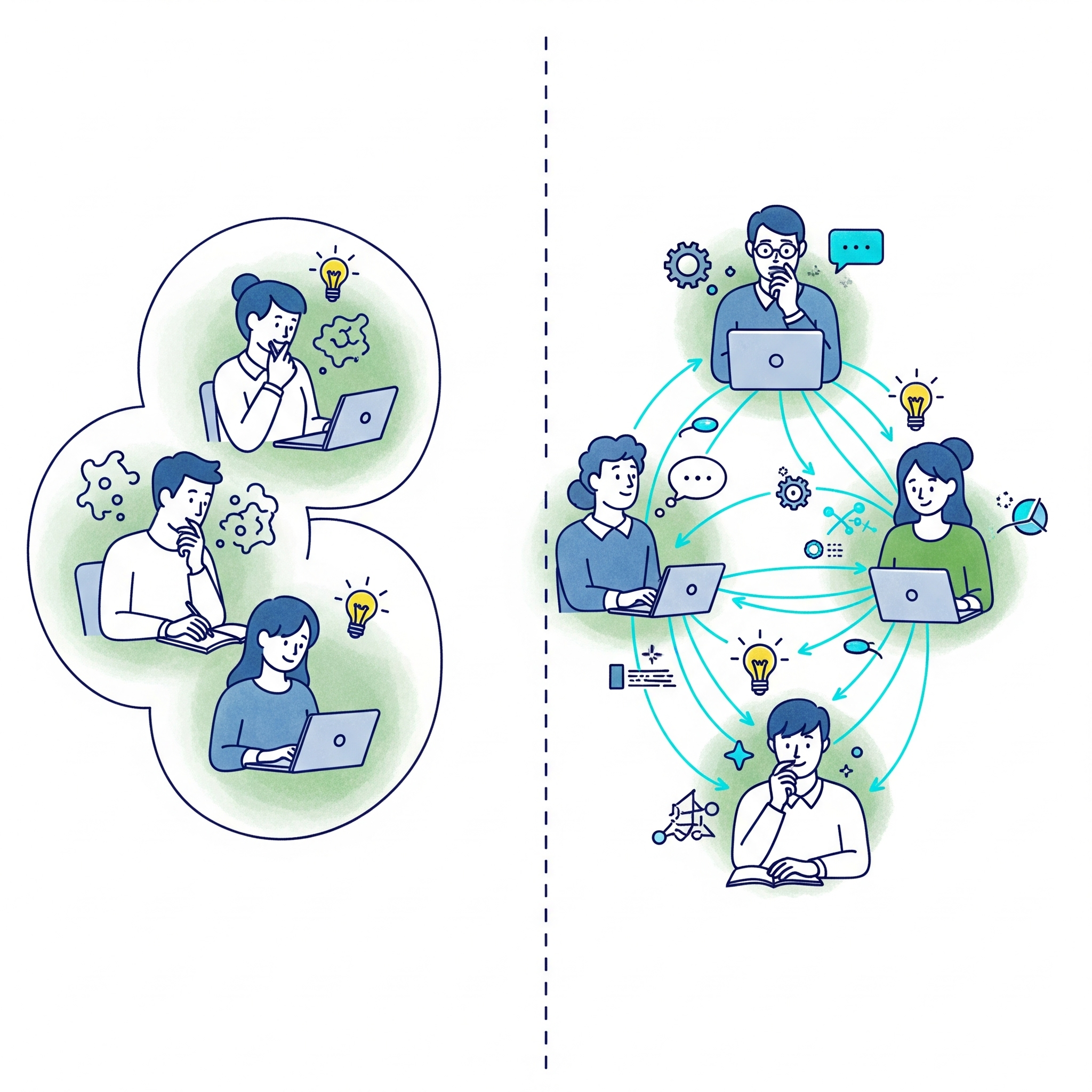
While most organizations invest heavily in external user communities, they completely neglect internal product communities, creating costly silos and missed innovation opportunities. Deloitte research shows that companies with active internal product communities reduce solution development time by 43% and increase cross-functional innovation by 67% compared to siloed teams. The solution isn't more external community building but systematic internal networks that harness connection, learning, and co-creation to unlock organizational capacity. These communities create knowledge-sharing networks, accelerate problem-solving through collective intelligence, and drive innovation through purposeful cross-functional collaboration.
The Global Challenge That Changed How I Think About Communities
I was working at a global company with sales and support teams in nearly every region of the world. We had been struggling to grow in some low-traffic regions and desperately needed local expertise and knowledge to understand the gaps and close them.
Our process was broken from the start.
When I started, most changes came from random requests that filtered up from regional reps to managers to executives, then got passed to our leadership team and trickled down to our product teams. By the time we received these requests, we had often lost the sense of urgency and the scale of the opportunity. We'd have to dig into things ourselves to really understand what was being asked for.
It was time-consuming, wasteful, and prone to mistakes. More frustrating was knowing that the solutions to many problems already existed somewhere in our organization, but we had no systematic way to discover and share them.
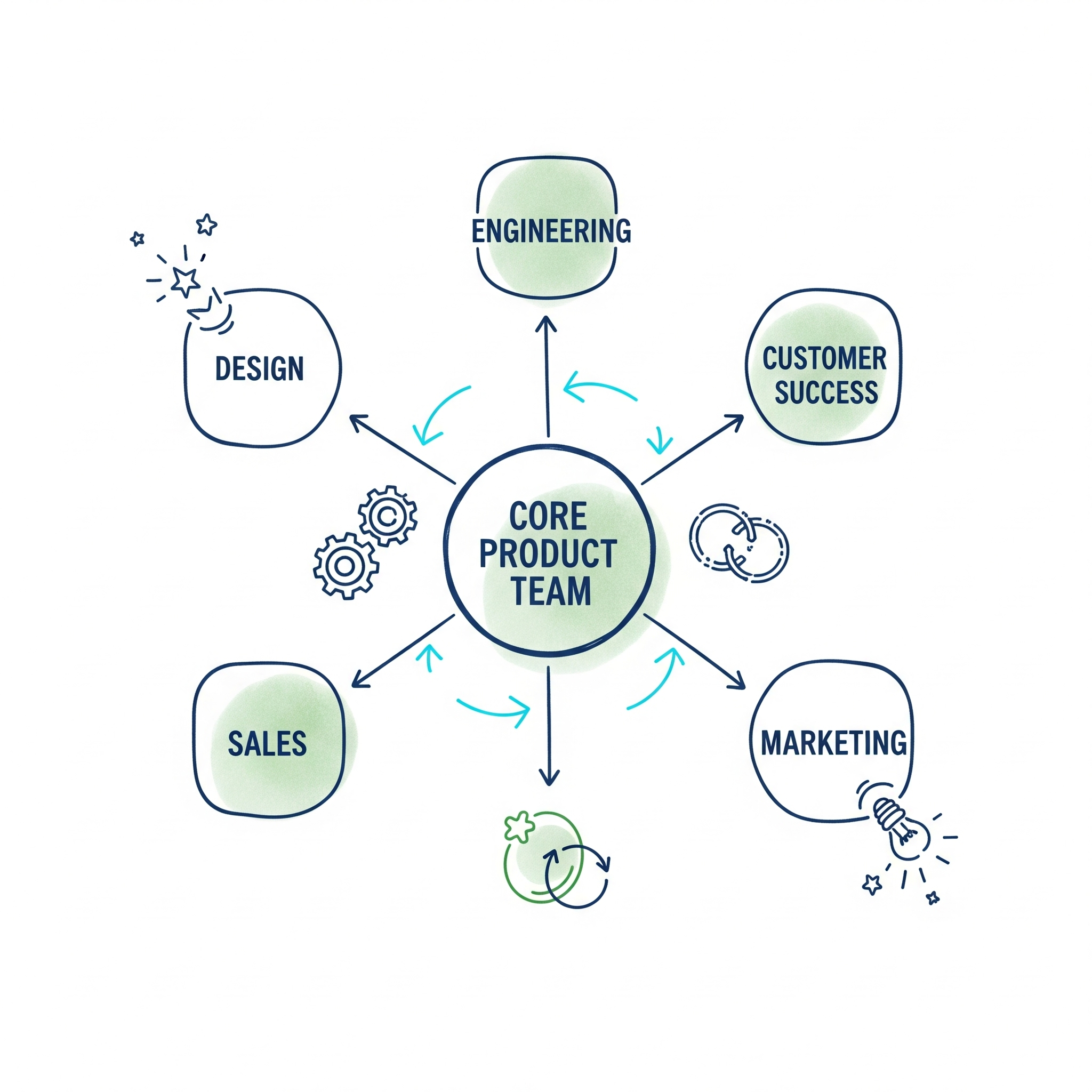
That's when we decided to create something different: a series of cross-organizational product councils that included representatives from all these regions who could provide insights, suggestions, pitches, and reviews of our product features and content strategies.
The transformation was immediate and surprising.
These councils became two-way communication channels where we could share new feature developments and product updates while gathering real-time feedback from the field. Even though participating in these councils wasn't part of their official job responsibilities, regional reps scrambled to join them.
They enjoyed having a voice in the future of the product and could see direct benefits both in increasing local competitiveness and building stronger organizational connections. Within six months, our regional innovation cycle had accelerated dramatically, and we were solving problems we didn't even know existed.
But the real breakthrough was realizing we had accidentally built something more powerful than a feedback mechanism. We had created an internal product community that was generating collective intelligence and driving innovation at a pace we'd never achieved through traditional hierarchical structures.
The Hidden Cost of Community Neglect
The Internal Innovation Paradox
Most organizations spend enormous resources building external user communities while completely ignoring internal product communities. This creates what I call the "internal innovation paradox" where teams:
- Reinvent solutions that already exist elsewhere in the organization
- Miss cross-functional opportunities because departments don't communicate systematically
- Duplicate research and development efforts across different product lines
- Lose institutional knowledge when key employees leave or switch teams
- Struggle with decision-making because insights remain trapped in departmental silos
MIT Collective Intelligence Research shows that internal knowledge-sharing networks improve problem-solving effectiveness by 234% and reduce duplicate work efforts by 56%. Yet most organizations have no systematic approach to building these networks.
The Silo Tax
Every organization pays what I call the "silo tax"—the hidden cost of not connecting internal knowledge and capabilities effectively. This tax includes:
- Time Tax: Teams spending weeks solving problems that other teams solved months ago
- Innovation Tax: Missing breakthrough opportunities that require cross-functional perspectives
- Knowledge Tax: Losing valuable insights when they remain trapped within departmental boundaries
- Engagement Tax: Employees feeling disconnected from broader organizational purpose and impact
McKinsey's Organizational Health Index shows that organizations with strong internal communities report 31% higher employee satisfaction, 45% better knowledge retention, and 28% faster decision-making processes.
The Three Pillars of Internal Product Communities
Pillar 1: Connection Infrastructure
Systematic Network Building
Unlike external communities that form around shared interests, internal product communities require intentional design around shared challenges and opportunities. It also requires more than just setting up a Slack Channel to post random thoughts. This means:
- Regular Cross-Team Showcases: Monthly sessions where different teams demonstrate solutions, share challenges, and identify collaboration opportunities
- Quarterly Innovation Challenges: Structured problems that require multiple departments to contribute diverse perspectives and capabilities
- Async Collaboration Tools: Digital platforms that enable ongoing knowledge sharing, question asking, and solution building across time zones and schedules
- Connector Role Recognition: Identifying and supporting natural relationship builders who help bridge departmental divides
Pillar 2: Learning Architecture
Knowledge Sharing Protocols
Internal communities thrive when they have systematic approaches to capturing, sharing, and building on collective knowledge:
- Solution Documentation: Standardized ways to capture and share successful approaches so they can be adapted by other teams
- Challenge Broadcasting: Channels for teams to share complex problems they're facing so others can contribute insights or solutions
- Cross-Functional Learning Sessions: Regular opportunities for different disciplines to teach each other their core methodologies and perspectives
- Institutional Memory Systems: Processes that preserve valuable knowledge even when team members transition to different roles
Pillar 3: Co-Creation Mechanisms
Collective Intelligence Activation
The most powerful internal communities don't just share existing knowledge—they create new knowledge through systematic collaboration:
- Cross-Team Project Structures: Formal mechanisms for teams to work together on challenges that require diverse expertise
- Innovation Incubation Programs: Systems that allow promising ideas to get resources and support from multiple departments
- Decision-Making Frameworks: Processes that harness collective intelligence for complex strategic choices
- Recognition and Reward Systems: Ways to celebrate and incentivize community contributions that drive organizational outcomes
Expert Insights on Internal Innovation Networks
Nilofer Merchant, collaborative innovation expert, captures the fundamental shift: "The future of product innovation isn't about individual genius; it's about collective intelligence. Internal communities are the nervous system of innovative organizations."
Dave Gray, author of The Connected Company, emphasizes the structural importance: "Companies are fundamentally networks of people. Product communities make those networks visible and purposeful rather than accidental and chaotic."
Linda Hill, Harvard leadership expert, highlights the innovation catalyst effect: "Innovation requires the collision of different perspectives. Internal product communities create systematic collisions that generate breakthrough thinking."
These perspectives point to a crucial evolution: organizations that treat internal community building as seriously as external community building develop sustainable competitive advantages that are difficult for competitors to replicate.
Warning Signs Your Organization Needs Internal Communities
Structural Red Flags:
- Teams frequently discover other teams have already solved similar problems
- Cross-functional projects consistently take longer than expected due to coordination challenges
- Employee surveys show low scores for "feeling connected to the broader organization"
- Knowledge and capabilities seem to disappear when key employees leave
- Innovation initiatives struggle to gain traction across multiple departments
Cultural Red Flags:
- People say "I didn't know we already had expertise in that area"
- Departments compete more than they collaborate
- Meetings focus more on reporting up than sharing across
- New ideas require extensive bureaucratic approval processes
- Success stories rarely spread beyond the teams that created them
If you recognize these patterns, your organization is likely missing significant innovation and efficiency opportunities that systematic internal communities could unlock.
The Implementation Roadmap: Building Your Internal Product Community
Phase 1: Community Audit and Design (Weeks 1-4)
Map Your Hidden Networks
Start by understanding the informal networks that already exist within your organization:
- Identify Natural Connectors: Who are the people others go to for advice, introductions, or problem-solving help?
- Find Knowledge Clusters: Which teams or individuals are known for specific expertise that others might benefit from?
- Discover Communication Patterns: How do insights and solutions currently spread (or fail to spread) across your organization?
- Assess Community Readiness: Which groups are already collaborating informally and might be ready for more systematic community structures?
Design Your Community Architecture
Based on your audit, design community structures with:
- Clear Purpose: Specific problems the community will solve or opportunities it will pursue
- Defined Membership: Criteria for who should participate and how they'll be invited
- Engagement Mechanisms: Regular touchpoints, communication channels, and collaboration methods
- Success Metrics: Ways to measure community impact on both innovation and business outcomes
Phase 2: Connection Infrastructure (Weeks 5-12)
Launch Your Pilot Community
Start with one focused community around a specific product challenge or opportunity:
- Monthly Cross-Team Showcases: Begin with simple sessions where teams share recent wins, current challenges, and areas where they'd welcome collaboration
- Problem Broadcasting Channel: Create a space (Slack channel, internal forum, or shared document) where teams can share challenges they're facing
- Solution Library: Build a simple repository of successful approaches that teams can reference and adapt (provide templates and basic questions to get people started)
- Connector Recognition: Publicly acknowledge people who help others find solutions or make valuable connections or who submit content to the library and channels regularly
Phase 3: Value Demonstration and Scaling (Weeks 13-24)
Measure and Communicate Impact
Track the tangible benefits your internal community creates:
- Innovation Velocity: How much faster are problems being solved through community collaboration?
- Knowledge Reuse: How often are solutions being adapted from one context to another?
- Cross-Functional Projects: Are teams initiating more collaborative projects independently?
- Employee Engagement: Are community members reporting higher satisfaction and connection to organizational goals?
Scale Successful Patterns
Once you've proven the value of internal product communities, replicate successful patterns:
- Community Templates: Create frameworks other teams can use to start their own communities
- Best Practice Sharing: Teach successful community practices to other potential community builders
- Leadership Support: Secure organizational commitment to community building as a strategic capability
- Resource Allocation: Ensure communities have the tools, time, and recognition needed to thrive
Actionable Takeaways: Start Building Internal Communities This Month
Week 1: Conduct Your Network Audit
Map the informal knowledge-sharing that already happens in your organization. Interview 5-10 people across different teams to understand how they currently find solutions, share insights, and collaborate across departmental boundaries.
Week 2: Identify Your Pilot Community Opportunity
Choose one specific product challenge or opportunity that would benefit from cross-functional collaboration. Look for problems that multiple teams are trying to solve independently or opportunities that require diverse expertise.
Week 3-4: Design and Launch Your First Community Touchpoint
Create a simple monthly session where relevant teams can share insights about your chosen focus area. Keep the format informal but structured, focusing on learning and connection rather than formal presentations.
The Compound Effect of Internal Community Building
Building internal product communities isn't just about solving immediate collaboration challenges. It's about developing organizational capabilities that compound over time.
When you systematically connect internal knowledge and capabilities, several powerful effects emerge:
Innovation Acceleration: Teams start building on each other's work rather than starting from scratch, creating exponential rather than linear progress.
Knowledge Preservation: Institutional wisdom gets captured in community relationships and documentation rather than disappearing with individual departures.
Employee Engagement: People feel more connected to organizational success when they see how their work contributes to broader outcomes and when they can learn from diverse colleagues.
Competitive Advantage: Organizations that effectively harness their collective intelligence move faster and see opportunities that competitors with siloed structures miss entirely.
The question isn't whether your organization has untapped internal innovation potential. The question is whether you're building the systematic communities needed to unlock it before your competitors figure out the same approach.
Key Takeaways:
- Internal product communities reduce development time by 43% and increase innovation by 67%
- Organizations pay a "silo tax" through duplicated efforts, missed opportunities, and lost knowledge
- MIT research shows internal knowledge networks improve problem-solving by 234%
- Three pillars: Connection Infrastructure, Learning Architecture, and Co-Creation Mechanisms
- McKinsey shows strong internal communities deliver 31% higher employee satisfaction
- Implementation follows three phases: Audit/Design, Connection Infrastructure, and Value Demonstration
- Internal communities create compound effects: innovation acceleration, knowledge preservation, and competitive advantage