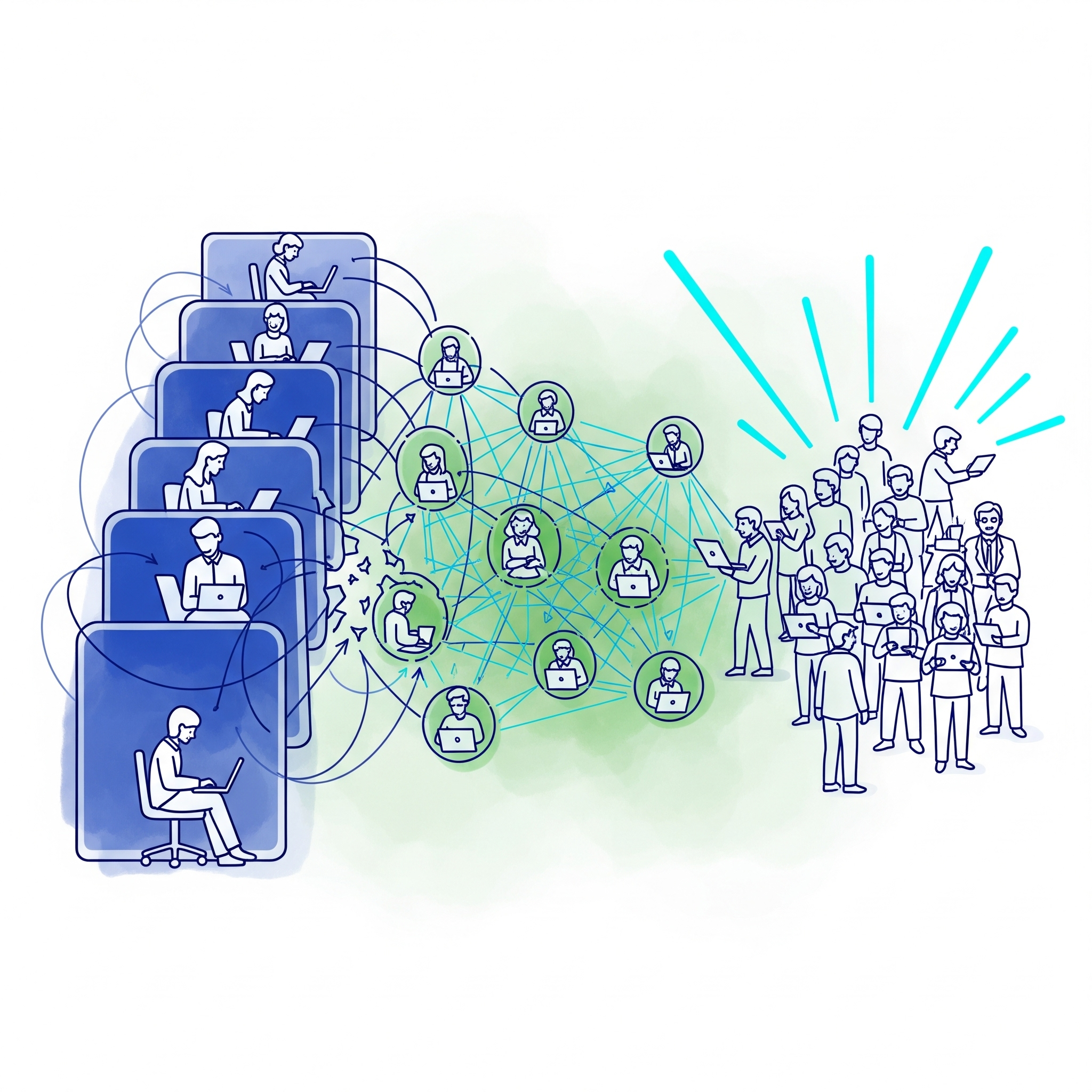
I took over a data science team building advanced scoring models for content assessment. We were on the 7th iteration of our regression model, which had actually decreased its ability to correctly score documents. A new data analyst with an interest in neural networks offered to work on this on the side. His different approach -- using document embeddings instead of just metadata -- increased our scoring effectiveness by 30%. The breakthrough didn't come from the expert who had been working on the problem for years. It came from someone with fresh eyes, different experience, and enthusiasm for exploring new approaches.
If that analyst hadn't been part of our team, we'd still be on iteration 8 of a failing regression model. His breakthrough wasn't just about neural networks -- it was about what happens when you bring different perspectives to a stuck problem. That experience taught me something I keep coming back to: individual expertise has limits. Collective intelligence solves problems better.
Why Solo Expertise Isn't Enough
Our scoring model had been built by a talented data scientist who deeply understood regression analysis. But that depth had become a trap. Each iteration was a variation on the same approach, and seven rounds of diminishing returns proved that more effort in one direction wasn't the answer. What we needed wasn't a better regression model. We needed someone who would question whether regression was the right approach at all.
This is what learning communities do. They shift you from being the smartest person in the room to being part of the smartest group in the organization. When you're stuck, you can tap into collective experience instead of pushing harder in the same direction. Breakthrough ideas emerge when solutions from one domain get applied to challenges in another -- exactly what happened when our analyst brought neural network thinking to a regression problem.
What I Learned Building That Team
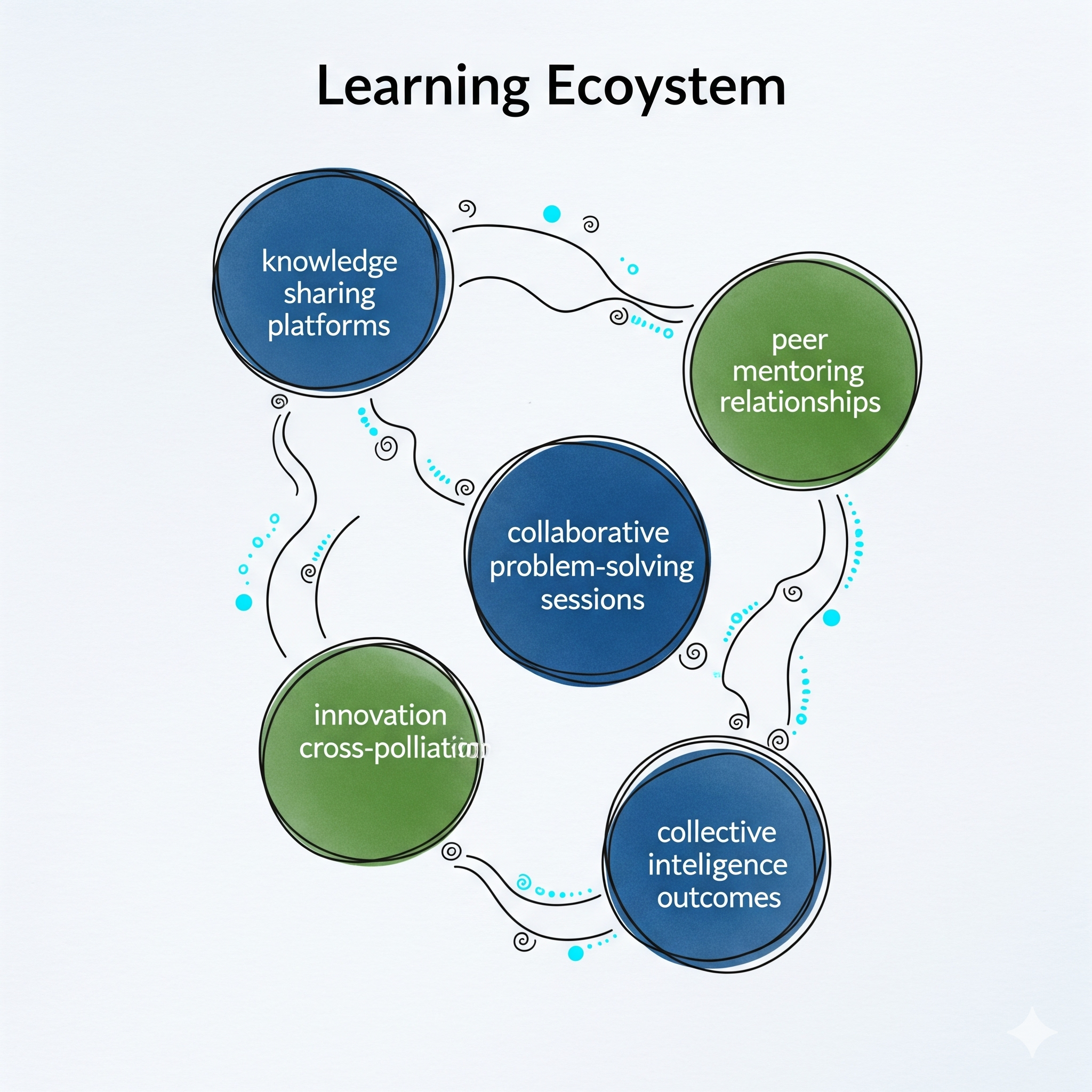
What worked for my data science team was creating structured ways for diverse expertise to collide. It didn't happen by accident. We had to be intentional about it.
First, we brought in people with different backgrounds on purpose -- not just experienced data scientists, but analysts, engineers, and people from adjacent domains who thought about problems differently. That's how we got the analyst who knew neural networks. Then we created regular spaces for those perspectives to surface. Monthly problem-solving sessions where anyone could bring a challenge. Mentoring pairs that went both directions -- experienced team members shared domain knowledge, and newer members shared fresh techniques. Lightning talks where someone would present an approach from outside our usual toolkit.
The key was making these sessions solve real problems, not theoretical exercises. When the analyst proposed document embeddings, it wasn't in a brainstorming workshop. It was because he'd seen our actual scoring data and recognized a pattern from his previous work. The community gave him a path to contribute that insight.
Over time, this became self-reinforcing. People saw that contributing different perspectives led to real results, so they contributed more. The team got better at recognizing when they were stuck in a single-approach rut and actively sought out different viewpoints.
Fresh Eyes Aren't Luck
It would be easy to chalk up the scoring model breakthrough to luck -- we just happened to hire someone who knew the right technique. But that's not what happened. We built a team that welcomed different approaches, created space for people to challenge the existing direction, and made it normal to say "what if we tried something completely different?" The analyst's breakthrough was the product of that environment, not a happy accident.
Individual expertise matters, but it has a ceiling. If you want to push past it, build communities where different perspectives don't just coexist -- they actively collide.