
When Templates Became My Career Trap
When I first became a product manager during the dot-com boom, the field was still relatively new. Everyone joked that every barista was becoming a PM, but I felt well qualified and excited for the opportunity. I had achieved both business and technology degrees, plus internships and school projects in entrepreneurship that prepared me to navigate between engineering, design, finance, support, sales, legal, and customer teams.
As I learned on the job, I threw myself into mastering the craft. I read every product management book I could find. I took certificate programs in UX design and web application development. Most importantly, I built an extensive collection of templates and starter guides that could handle nearly any request: Product Requirements Documents, technical specifications, database schemas, user research studies, press releases, Agile epics and stories, Jobs-to-be-Done analyses. I was ready for anything, or so I thought.
But as I progressed in my career, I started to realize that having the best documentation wasn't solving our biggest problem. Providing quality paperwork wasn't enough. Things were changing every few years, requiring completely new approaches to products, services, technologies, form factors, and user interactions. Regulations were reshaping entire industries. Innovations were enabling entirely new business models.
I didn't want my job to be just documenting a steady stream of feature requests in one direction. If I really wanted to help the business adapt to a changing world, I needed fundamentally different capabilities.
This is when I started studying innovation management, creativity management, and change management. I began developing skills in organizational awareness that would let me not just suggest great new features, but pitch entirely new business models, completely different operational approaches, and fresh ways to plan strategy and tactics.
As PMs, we have the potential to help companies change course and plot new directions. But it's only potential. Leaders don't know what they don't know. They don't realize they can ask PMs to do scenario analysis, empowerment consulting, or strategic facilitation.
That's when I understood that the real career opportunity wasn't in getting better at traditional PM tasks. It was in learning how to earn the authority to anticipate, plan for, and maybe even save companies from the big changes coming their way.
The Skills That Actually Became My Career Moat
The skills I developed during that pivot away from templates are exactly the ones becoming most valuable now. AI can already write requirements documents, analyze user data, and generate project plans. My template collection was an early version of what AI now does better and faster. If I'd stayed on that path, my entire professional toolkit would be automatable.
But the scenario planning and change management skills I developed? Those became my actual career moat. When I learned to draft multiple possible futures for a product and build strategies that worked across different outcomes, I was developing a capability that no tool can replicate -- because it requires judgment about unprecedented situations, not pattern-matching on historical data.
The same was true for the organizational skills. Learning how to pitch entirely new business models meant learning how to read a room, build coalitions, and help other people make better decisions. I stopped being the PM who produced the best documents and started being the PM who helped teams navigate the hard pivots. That shift -- from documenting decisions to enabling them -- turned out to be the difference between a career that could be automated and one that couldn't.
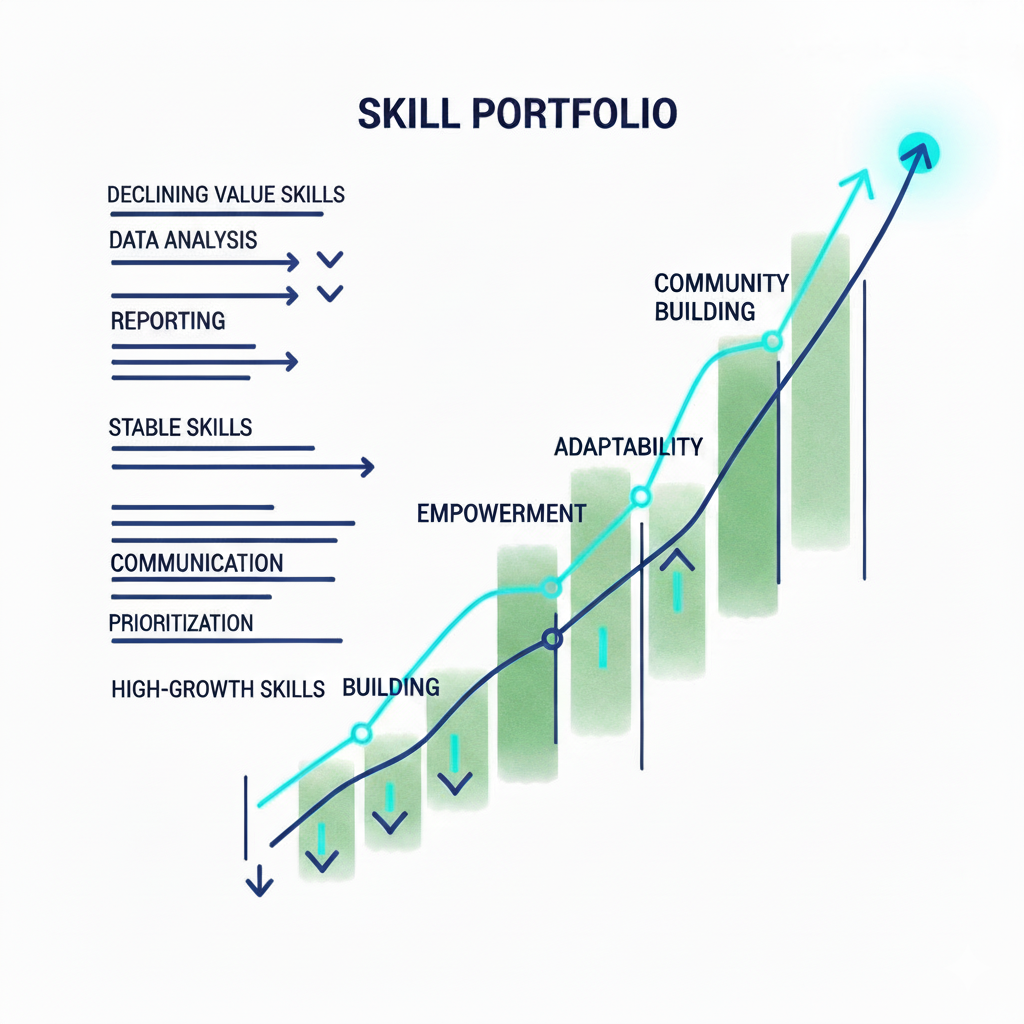
Looking back, the capabilities that matter most fall into a clear pattern. Strategic foresight -- the ability to see around corners the way I eventually learned to see the shifts coming in my own career. Empowerment -- helping teams make better decisions rather than making all the decisions yourself. Community building -- the cross-functional alliances and stakeholder alignment that no solo practitioner can replace. And facilitation -- turning conflicting perspectives into good decisions through structured conversation rather than through better paperwork.
None of those show up in a template library. None of them can be automated. And all of them become more valuable as the tactical work gets handled by tools.
The Best Career Insurance
If I could go back and talk to the version of me who was proudly building that template collection, I'd tell him this: the best career insurance isn't mastering today's tools. It's developing the judgment to know when everything needs to change -- and the organizational skills to help make that change happen. The PMs who will thrive aren't the ones with the best prompts or the most polished specs. They're the ones leaders turn to when the big shifts arrive and nobody knows what to do next.