The Prototype on Someone's Computer
I ran a product that let business owners manage and respond to reviews from customers about their offerings. The data was rich, and I wanted to bring more insight to our customers through sentiment analysis. The problem: we had no budget for it, no data science team availability, and the third-party solutions were expensive.
So we started digging around. And that's when we found a prototype sitting on a developer's computer. It was a sentiment analysis tool he'd built as a side project. We resurrected it, tested it against our structured review content, and discovered it worked perfectly. That prototype became a featured product at our annual customer event.
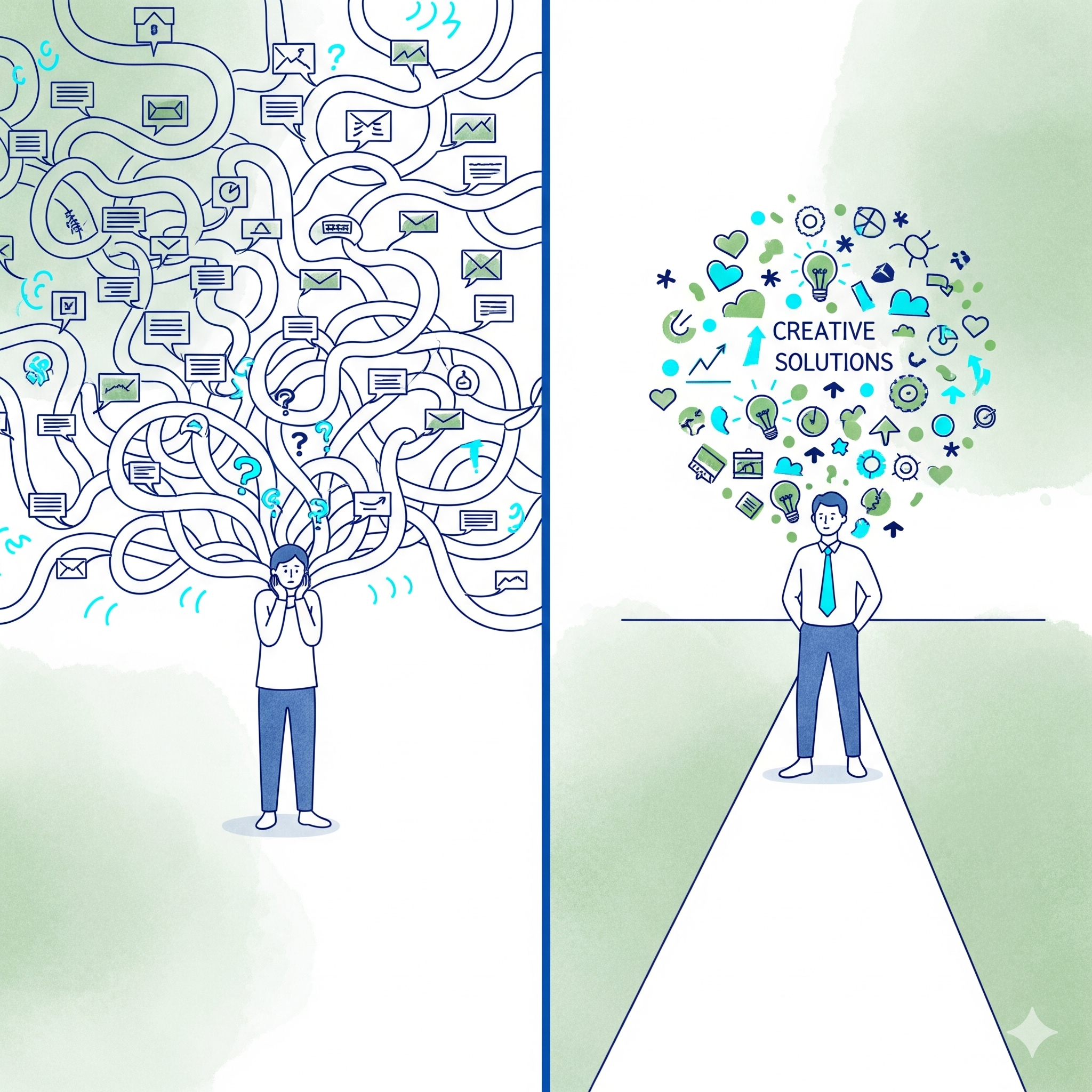
We found that prototype because we had no other choice. With budget and a data science team, we would have spent months evaluating vendors or building something from scratch. The constraint didn't limit us -- it made us look in places we never would have otherwise.
Why Having Everything Can Give You Nothing
I've seen this pattern repeatedly. Teams with unlimited options produce mediocre results because they never have to dig deep enough to find the elegant solution. When everything is possible, it becomes impossible to choose what matters most. The urgency that drives breakthrough thinking disappears.
If we'd had budget for that sentiment analysis project, here's what would have happened: weeks of vendor evaluations, a shortlist, pilot programs, procurement negotiations, integration planning. We would have gotten a decent result eventually -- and it would have taken six months and cost ten times more than resurrecting a prototype that was already built for our exact data structure. The constraint forced us to ask a different question. Instead of "which vendor should we buy?" we asked "what do we already have?" That question led us straight to the answer.

Using Constraints on Purpose
The approach isn't to impose random limitations. It's to recognize that the boundaries you already have are creative fuel -- and to apply that same principle intentionally when boundaries aren't naturally present.
Think about where your team is spending too much time evaluating options instead of testing solutions. That's a sign they need a tighter constraint. Time-boxing works well here: set a 30-day sprint instead of an open-ended exploration period. Limit a feature set to three critical user needs and see what your team builds when they can't add a fourth. The same pressure that made us dig through a developer's side projects instead of browsing vendor catalogs can be created deliberately.
The cultural shift matters too. When my team saw that our zero-budget constraint led to a featured product at our annual customer event, it changed how they thought about limitations. Constraints stopped being problems to complain about and became starting points for creative problem-solving. We started asking "what would we do if we had half the time?" not as a stress test, but as a genuine way to find the core of an idea.
The Solution Was Hiding in Plain Sight
That sentiment analysis prototype had been sitting on a developer's computer for months. It was already built for our data. It already worked. But nobody would have found it if we'd had the budget to look elsewhere. The constraint is what forced us to search our own backyard -- and that's where the answer was the whole time.
Every project has constraints. The question is whether you treat them as obstacles or as the thing that points you toward the solution you'd otherwise walk right past.