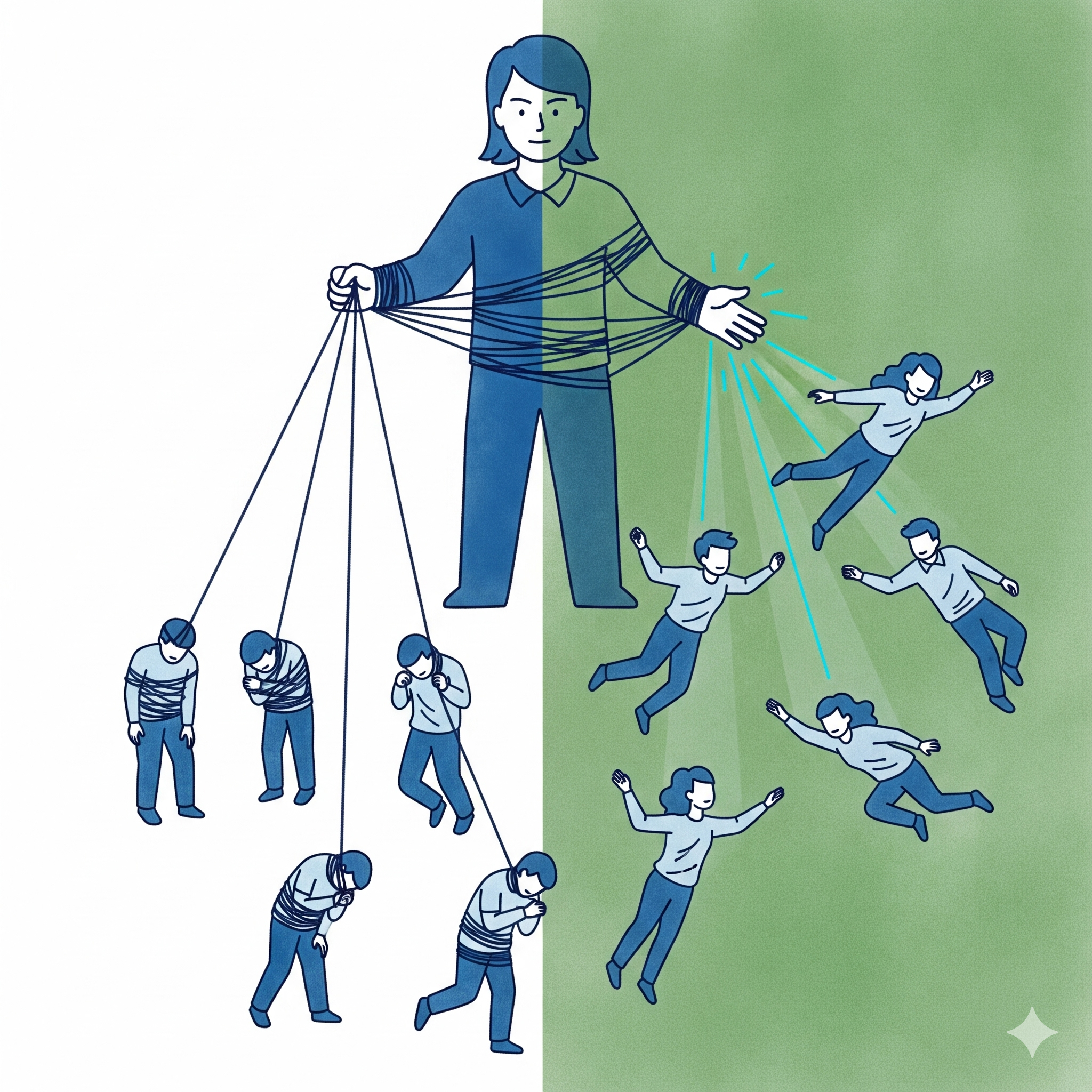
When I Stopped Leading and Started Empowering
I learned this lesson while heading up a profitable PC device portal product that had been stable for several years. Having just come from a similar industry that was churning through mobile and tablet viewing trends, I could see the writing on the wall. We needed to revamp our product for mobile devices before these trends negatively affected our business.
My first instinct was to use my experience to lead the change. I had seen this transition before, I understood the technical challenges, and I knew what needed to happen. But as I started developing the strategy, I realized that dictating the new product direction would create exactly the wrong kind of organizational dynamic.
If I wanted to convince leadership to invest in a significant product revamp, I needed more than a good plan. I needed organizational energy, cross-team commitment, and genuine enthusiasm for the change. Instead of giving direction, I decided to give my teams a challenge and let them come up with the suggested direction.
I brought together experts from across the company: the UX leader, the engineering leader, the sales leader, and others. Instead of presenting my solution, I presented the problem. I shared the market data, explained the competitive threats, and asked them to dig into the mobile challenges and marketplace impacts themselves.
Each leader took ownership of different aspects of the challenge. They started researching, innovating, and pitching new directions. Instead of trying to control the change process, I let the content team, design team, and tech teams experiment, try new things, and make the mistakes we needed to make to learn what we needed to learn.
The results exceeded my expectations in two ways. First, the new direction we collectively developed was significantly better than what I would have suggested on my own. The distributed expertise and diverse perspectives created solutions I never would have imagined.
Second, by empowering team members to take ownership over the future of the product with me, we all had a vested interest in seeing it succeed. When we presented the initiative to leadership, they didn't just see a product proposal. They saw a cross-team initiative with tremendous support and energy. The project was approved with enthusiasm and adequate resources.
By giving away control over the solution, I had gained far more influence over the outcome than I could have achieved by pushing my own plan.
What Made It Work (and What I Almost Got Wrong)
Looking back, what made this work wasn't luck. There were specific things I did -- and didn't do -- that made empowerment actually produce results instead of just producing chaos.
I kept the strategic direction but gave away the solutions. Instead of deciding the mobile strategy myself, I held onto only the high-level problem: we need to be ready for mobile before these trends hit our business. Everything else -- the specific approach, the technical architecture, the design direction -- I pushed to the people with better context than me. The UX leader understood mobile interaction patterns I'd never thought about. The engineering lead saw infrastructure possibilities I would have missed. By keeping the "what" and giving away the "how," I got solutions that were better than anything I would have designed alone.
I didn't just hand off the problem and walk away. That would have been abdication, not empowerment. I stayed involved by asking questions instead of giving answers. When the design team proposed an approach I was unsure about, I asked them to walk me through their reasoning rather than overriding them. When early experiments failed, I made it clear that was expected and valuable. The teams needed to know I was invested in their success, not just offloading my work.
I made sure the right people got the credit. When we presented to leadership, every team leader spoke to their piece of the strategy. It wasn't "my" pitch with supporting players -- it was a cross-functional team presenting a plan they'd built together. Leadership didn't just see a product proposal. They saw organizational energy and genuine commitment. That's something no solo presentation, no matter how polished, can manufacture.
The Paradox in Practice
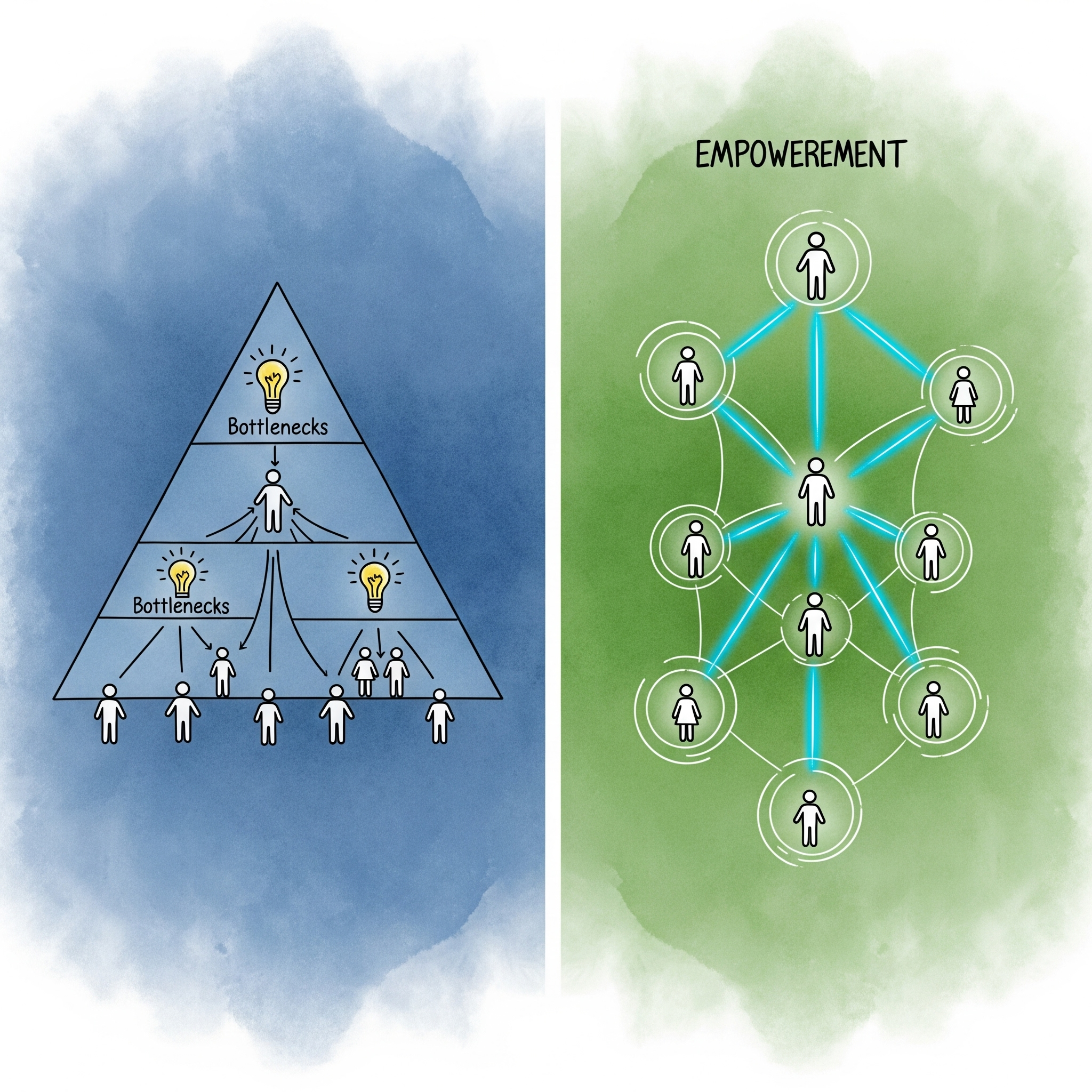
The mobile revamp project succeeded precisely because it wasn't "my" plan. If I had pushed my own strategy through, I might have gotten a decent outcome -- but I would have been the single point of failure, the bottleneck for every decision, and the only person with real commitment to making it work. Instead, by giving away control over the solution, I ended up with more influence over the outcome than I could have achieved any other way. The people I empowered became advocates for the direction, problem-solvers when things went sideways, and leaders in their own right. That's the paradox: you gain the most influence when you stop trying to hold onto it.