
When AI Rewrote the Rules Overnight
I experienced this lesson firsthand while working at an online education company that served millions of college students worldwide. We had built a robust marketplace connecting students with a vast library of content from professors, peer notes, research papers, and tutoring support. Our legal department worked tirelessly to ensure compliance across different countries and institutions. The business was thriving with steady, predictable growth.
Then AI arrived, and everything changed.
Suddenly, students didn't need to research multiple sources. They had one chat window that could synthesize information instantly. They didn't need tutors for most questions. They didn't even need to write original content anymore. Our entire value proposition was being commoditized by a technology that barely existed six months earlier.
To the company's credit, we did experiment with new business models. We built our own AI layer that could consolidate and personalize our content for specific student needs. We already had data scientists, machine learning experts, and AI developers who were excited to build solutions for this new reality.
But the executive team wasn't prepared for this level of fundamental disruption. They had built their careers on decades of steady, predictable growth. An existential threat was beyond their adaptive capacity. Leadership made one big bet. And while we did get a chance to iterate and show some progress, it wasn't fast or deep enough to compete with the worldwide forces against us. The one bet failed to turn the business around. After that, leadership was out of ideas and patience. They chose to shut down the business rather than double down on adaptation.
For those of us who wanted to compete in this new reality, it was a devastating missed opportunity. The infrastructure, talent, brand, and customer relationships were all there. What was missing was a leadership mindset prepared for multiple possible futures.
I've thought a lot about what we could have done differently. Not after AI arrived -- by then the clock was already ticking. The work needed to happen earlier, when things were still good. Here's what scenario planning would have looked like for us.
What We Should Have Done
Step 1: Scan for Signals Before They Become Crises
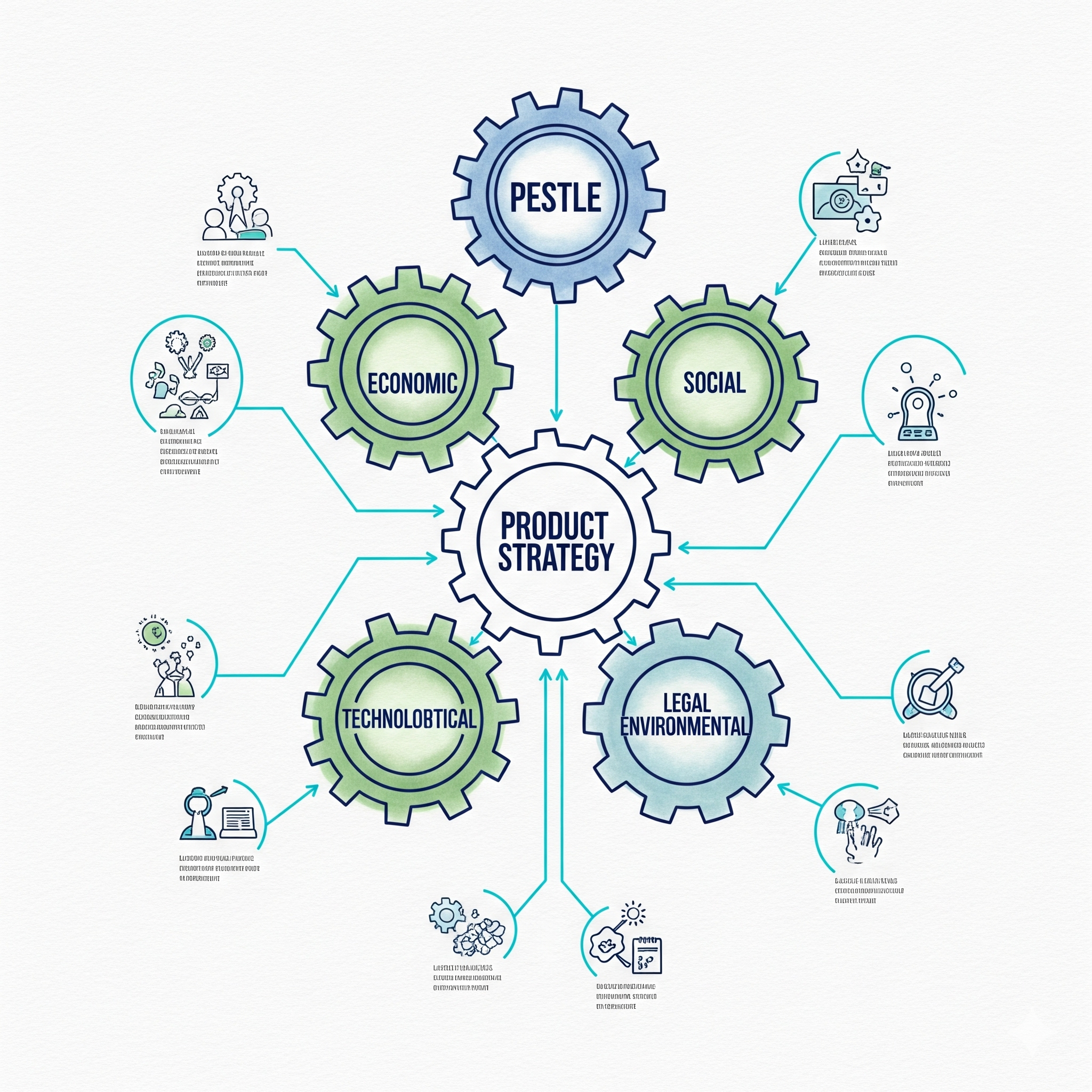
Scenario planning starts with structured scanning across Political, Economic, Social, Technological, Legal, and Environmental factors -- a PESTLE analysis. We were informally tracking competitors, but we weren't systematically watching the technology landscape for threats to our core model. AI-generated content was already emerging in adjacent spaces. Students were already shifting how they researched and studied. Those signals were there if we'd been looking for them. A structured scan would have flagged AI as a critical trend affecting our marketplace well before ChatGPT made it obvious to everyone.
Step 2: Build Multiple Futures, Not Just the Comfortable One
With those signals identified, we could have built 3-4 distinct scenarios. What if AI adoption accelerates and students stop needing curated content libraries entirely? What if AI becomes a supplement that makes our content more valuable, not less? What if regulatory crackdowns on AI in education create a window where trusted, human-curated content becomes a premium product? Each scenario was plausible. But our leadership only knew how to plan for one future: continued steady growth. When that future disappeared, they had nothing to fall back on.
Step 3: Prepare Adaptive Strategies with Clear Triggers
The real power of scenario planning is developing strategies ahead of time and defining the triggers that activate them. We could have identified core bets that worked across all scenarios -- like investing in our AI talent and building personalization capabilities. For the more disruptive scenarios, we could have had contingency plans ready with clear signals: if student usage of AI tools hits X%, launch the AI-powered content product. If content upload volume drops by Y%, accelerate the pivot to personalized learning. Instead, we made one big bet after the crisis hit, and when it didn't work fast enough, leadership was out of ideas.
What Was Really Missing
The infrastructure was there. The talent was there. We had data scientists, machine learning experts, and AI developers who were eager to build for this new reality. The brand and the customer relationships were there. What was missing was preparation for multiple possible futures -- a leadership team that had practiced thinking about disruption before disruption arrived. Scenario planning isn't about predicting the future. It's about building the muscle to adapt before you need it, so that when the world shifts, you're not starting from scratch.