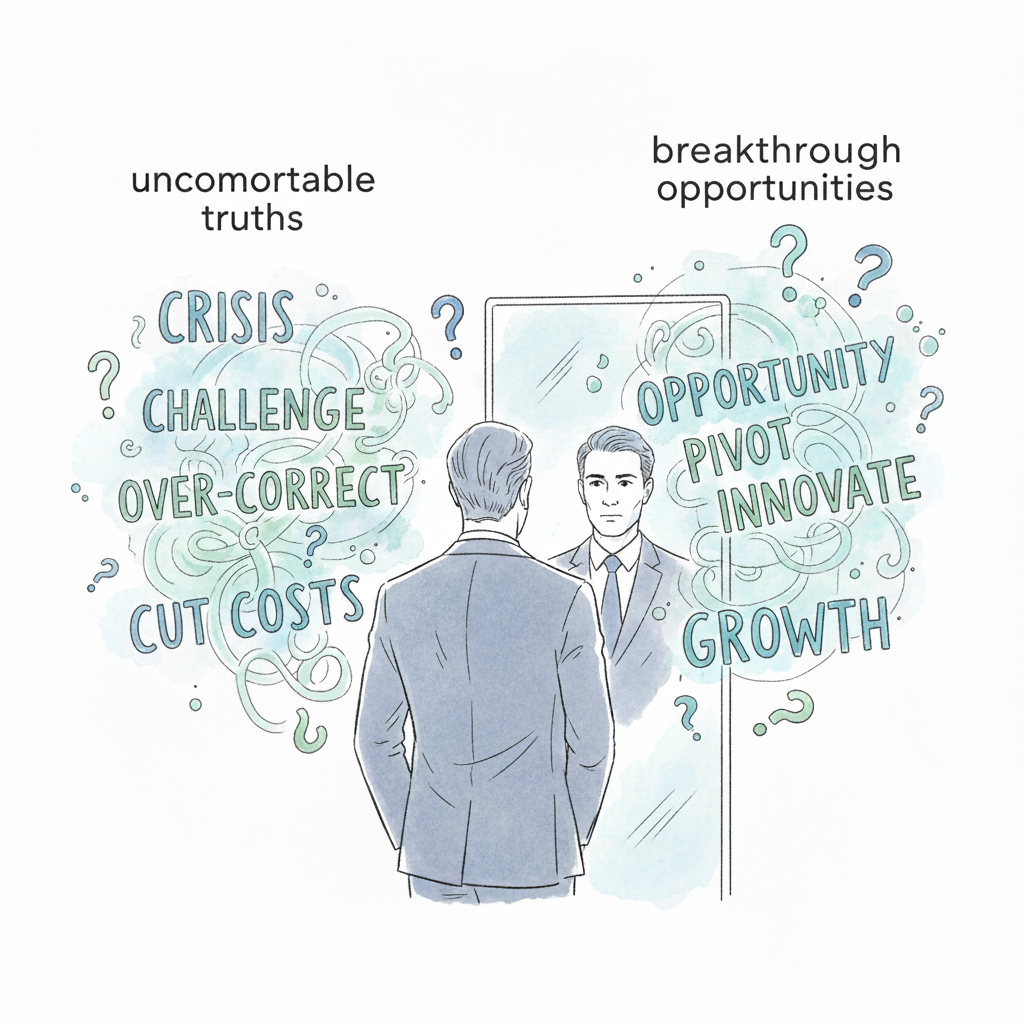
Three Interfaces, One Uncomfortable Question
I joined a company building a new user experience with three interfaces for image uploads and moderation. The roadmap was packed, engineering estimates were intimidating, and everyone seemed resigned to building three complex systems.
Instead of accepting the requirements at face value, I started asking uncomfortable questions: "Do we actually need human moderation at all?" "Are we sure partners and internal users need different interfaces?"
These weren't popular questions. They challenged months of planning and implied that smart people had made wrong assumptions. But they led to discoveries that transformed our entire approach. We went from three interfaces down to one, delivered faster with fewer resources, and created a better user experience than the original plan would have provided.
The breakthrough wasn't a framework or methodology. It was the willingness to ask the questions that made everyone uncomfortable.
Why We Avoid the Hard Questions
Most product managers are good at tactical questions: "How should we prioritize this feature?" "What does user research tell us?" These are important, but they operate within existing assumptions about what we're building and why. The questions we avoid are the existential ones -- "Should this product exist at all?" "Are we solving the right problem?" -- and we avoid them for understandable reasons. They challenge the foundation of work that's already in motion, and they can imply that smart people made wrong assumptions. They feel unproductive compared to tactical questions that generate neat action items. And sometimes they surface problems that are expensive or politically painful to address. So we keep building instead of confronting the possibility that we should stop.
The Cost of Not Asking
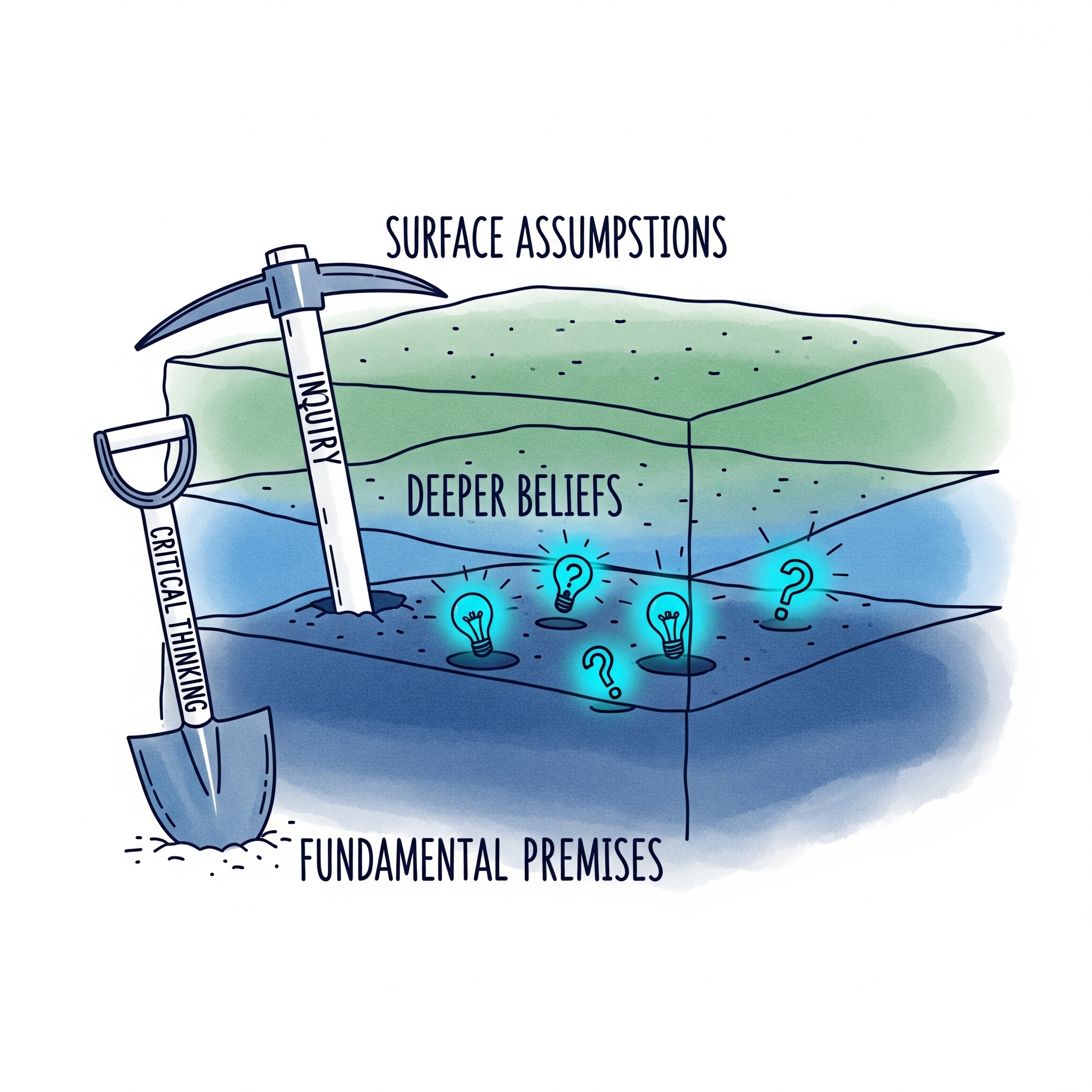
But avoiding those questions has real costs. When we don't challenge assumptions, we operate within invisible constraints. We perpetuate failing approaches because the sunk cost fallacy becomes institutionalized. We miss breakthrough opportunities that come from questioning what everyone else accepts as truth.
Think about my image moderation example. If I hadn't asked whether we needed human moderation at all, we would have built three separate systems to support a workflow that didn't need to exist. The cost wasn't just the engineering time -- it was the ongoing maintenance burden, the added complexity, and the worse user experience. All of that wasted effort would have been in service of an assumption nobody had bothered to test.
Discomfort Is the Signal
The most useful insight I've found is this: when a question makes you uncomfortable, it's usually pointing at an assumption that needs examination.
The questions that feel threatening often reveal beliefs you've never articulated. The constraints that seem immovable might actually be changeable variables. In that image moderation project, the question "Do we actually need human moderation?" felt almost rude to ask. The existing team had spent months on the moderation workflow. But the discomfort was the signal -- it was pointing directly at the assumption most worth challenging.
Making It Practical
You don't need a formal framework to start asking harder questions. Start by listing the five biggest assumptions underlying your current product strategy. For each one, ask yourself: what evidence actually supports this? What would change if the opposite were true?
The hard part isn't the process. It's building the courage to ask questions that make people -- including yourself -- uncomfortable. But that's where the breakthroughs live.